
If you’re looking for the best way to give a sensual, sexy massage that deepens connection without crossing boundaries, this guide will walk you through every step. It’s about creating an experience that feels luxurious, intimate, and safe — not about explicit stimulation. Think of it as choreography: mood, consent, technique, and aftercare all moving together so both partners feel comfortable and cherished.
Below you’ll find practical, step-by-step directions, plus atmosphere tips, a clear checklist of do’s and don’ts, and a comparison table for common strokes and their uses. Read it as a blueprint you can personalize; every couple is different, and the best massage is the one that responds to the person on the table.
Consent and Communication: The Foundation
Any sensual massage begins with a conversation. Before hands ever touch skin, talk about boundaries: what areas are welcome, what pressure feels good, and whether there are places off-limits (including genital areas). Ask if your partner wants purely calming touch or a more sensuous, arousing experience. Clear, explicit consent prevents awkward moments and builds trust.
Communication doesn’t stop once the music starts. Agree on a safe word or simple nonverbal signals that mean “slow down,” “more pressure,” or “stop.” Check in every few minutes, especially the first time you try a new technique. That ongoing exchange — verbal and tactile — makes the massage feel considerate and responsive rather than presumptive.
Setting the Scene: Ambience and Comfort
The environment shapes how a massage feels. Dim the lights, pick a playlist that’s relaxed and unobtrusive, and remove distractions like phones. Temperature matters: a room that’s too cold makes it hard to relax, while a warm space invites surrender. A soft, supportive surface — a massage table, sturdy bed, or cushioned floor mat — helps both giver and receiver settle into the moment.
Little details elevate the experience. Use clean, soft sheets or towels, and have a small towel nearby for wiping hands. If you light candles, keep them safely away from flammable materials. Scent can be powerful but conservative; a hint of lavender or a neutral, unscented oil is better than an overpowering fragrance.
- Room temperature and ventilation
- Soft lighting: lamps or candles (safely placed)
- Comfortable surface with clean linens
- Relaxing, low-volume music
- Water or light beverage available afterward
Preparing the space in advance means you can focus on touch, not logistics. That calm attention is part of what makes a massage feel sexy: the receiver senses that time and care were devoted to them.
Tools, Oils, and Practical Supplies
A few simple tools improve results. A bottle of massage oil or lotion reduces friction and lets your hands glide. Choose a product that suits your partner’s skin type: unscented, hypoallergenic options are safe for sensitive skin. Warm the oil in your hands or a small warming dish before applying it to avoid an abrupt cold sensation.
Other practical items include bolsters or pillows to support knees and ankles, and a small towel to protect hair or cover sensitive areas. Keep tissues and a water glass handy for aftercare. Avoid introducing anything that could cause irritation: no new products right before skin contact, and avoid thick creams that resist absorption.
- Massage oil (unscented or lightly scented)
- Soft towels and extra linens
- Pillows or bolsters for support
- Soft music source and dimmable light
Simple, high-quality items beat gimmicks. The point is to make touch feel effortless, warm, and continuous.
Basic Techniques — Step by Step
Start slow. Warming touch and long, even strokes set the tone more effectively than fussy manipulations. Use the palms, thumbs, and flats of the fingers. Vary pressure but avoid sharp pokes or quick jerks. Keep your hands relaxed and your movements deliberate.
Here is a straightforward sequence you can follow to give a full-body sensual massage while staying respectful of limits. Each step can be shortened or extended depending on the recipient’s comfort and time available.
- Begin with light, sweeping strokes down the back to distribute warm oil and soothe muscles.
- Move into kneading larger muscle groups — shoulders, upper back, calves — using the palms and heels of your hands.
- Spend time with gentle circular motions around the base of the skull and along the shoulders to release tension.
- Finish with slower, feathering strokes that relax the nervous system and signal the massage is winding down.
Keep the pressure mindful: heavier pressure can feel therapeutic, while lighter, caressing touch reads more sensual. Ask which they prefer and adapt accordingly.
Back: The Heart of Relaxation
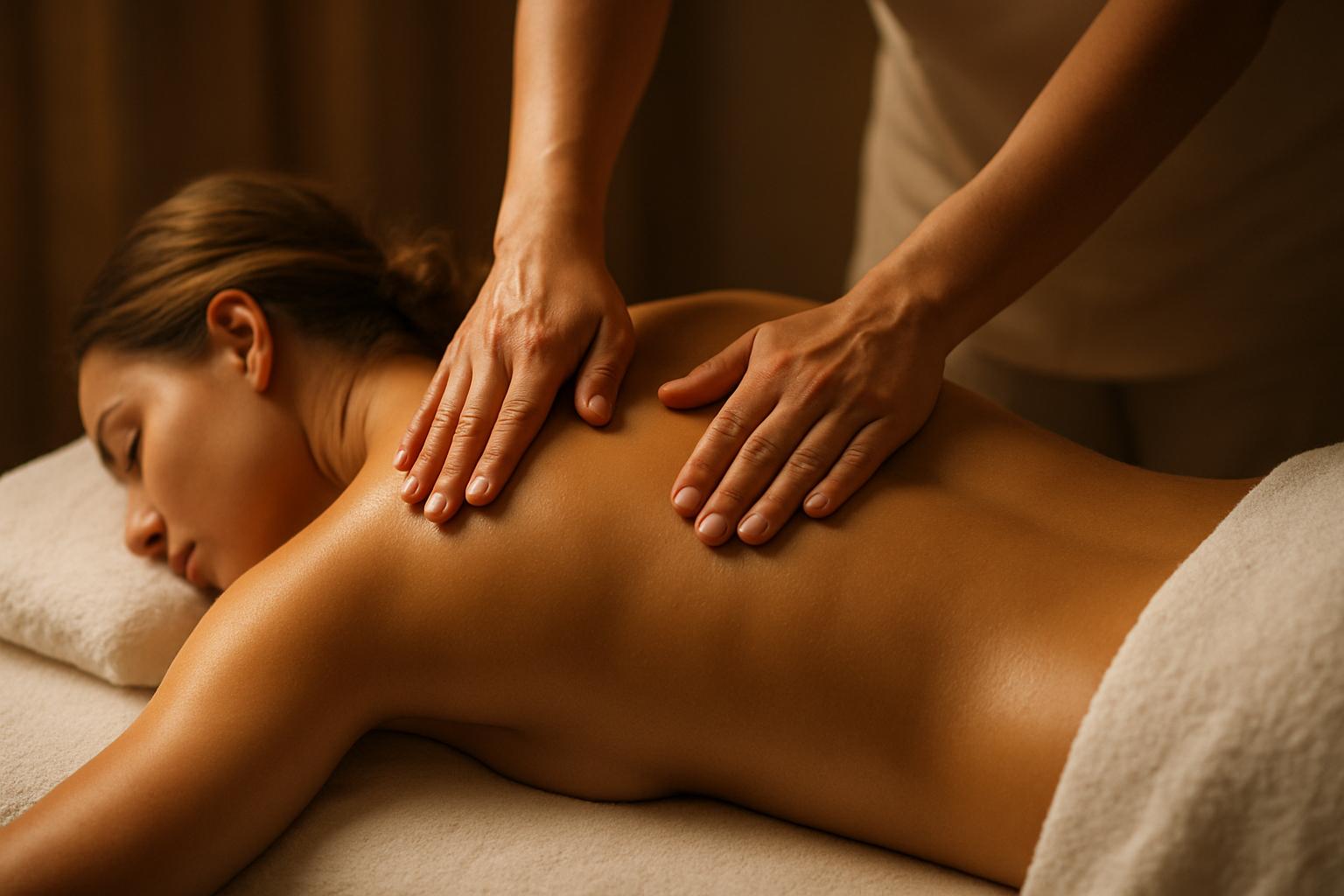
The back is a broad canvas and a great place to begin. Start at the shoulders and glide your hands down to the lower back, repeating long strokes that follow the spine but don’t press directly on it. This helps distribute oil and encourages relaxation across large muscle groups.
After warming the area, use alternating kneading with the heel of your hand along the muscles parallel to the spine. If your partner likes deeper work, gradually increase pressure, but always check in. Finish with slow, upward strokes that create a cooling, settling sensation.
Neck and Shoulders: Slow and Intentional
Tension collects in the neck and shoulders. Use small, deliberate circles with your fingertips at the base of the skull and along the trapezius muscles. Keep your movements unhurried — rushed rubbing is uncomfortable and undermines sensuality.
Support the head when working at the base of the skull; this prevents neck strain for both of you. Gentle compressions followed by gradual release help dissipate tightness without triggering pain.
Arms, Hands, Legs, and Feet: Detail Work
Move from larger surfaces to smaller zones. For arms and legs, long strokes toward the heart aid circulation and feel instinctively soothing. Transition to hands and feet with slow, attentive pressure on the palm or arch, and finish with light fingertip caresses along each finger and toe.
Hands and feet respond well to rhythmic, confident touch. These areas are intimate in a quiet way — attending to them shows attentiveness and care, which many find deeply sensual without being explicit.
Stroke Comparison Table
Use this table as a quick reference when choosing strokes for different goals. Pressure categories are gentle, medium, and firm. Adjust based on feedback and comfort.
| Stroke | Pressure | Best for | Effect |
|---|---|---|---|
| Long gliding (effleurage) | Gentle–Medium | Starting and ending; back, legs | Soothes, distributes oil, calms nervous system |
| Kneading (petrissage) | Medium–Firm | Shoulders, upper back, calves | Releases muscle tension, warms tissue |
| Thumb circles | Medium | Lower back, shoulder blades | Targets knots, adds focused relief |
| Feathering (light strokes) | Gentle | Scalp, final moments | Relaxes, signals closure |
Safety, Boundaries, and Common Mistakes
Respect for boundaries is non-negotiable. Avoid pressure on the spine, throat, or areas your partner has marked off-limits. If someone is pregnant, has recent injuries, or medical conditions, consult a professional or avoid certain maneuvers. Never assume a “sensual” setting means everything is allowed.
Common issues include moving too fast, using cold oil, or failing to check for discomfort. Another frequent mistake is overemphasizing skill over sensitivity — a firm, attentive presence often matters more than precise technique. Finally, avoid working hands that are tired; shaky hands convey impatience rather than care.
- Do ask and listen; consent is ongoing.
- Do maintain comfortable room temperature and warm hands.
- Don’t apply sudden or sharp pressure.
- Don’t use strong fragrances that can irritate or distract.
Aftercare and Keeping Intimacy Alive
The minutes after a massage are as important as the touch itself. Offer water, a few quiet minutes to breathe, and a warm blanket. Encourage slow movements; standing up too fast can make someone dizzy after deep relaxation. Share a few words of appreciation or ask how they felt to reinforce connection and mutual care.
Beyond the immediate moment, use massage as a bridge to other forms of intimacy: longer cuddling, talking, or simply holding hands. Sensual massage is a tool for attunement — it helps partners learn what each other likes and where to be gentler. Over time, that knowledge deepens trust and pleasure in non-sexual and sexual contexts alike.
- Offer water and a quiet space to rest for a few minutes.
- Ask open-ended questions about pressure and comfort.
- Express gratitude for the shared time, without pressure for further activity.
When to Seek Professional Help
There are great reasons to book a licensed massage therapist: chronic pain, serious muscle injury, or the need for specialized therapeutic techniques. A professional can also teach you safe ways to apply deeper work at home. If either partner experiences unexplained pain during or after a sensual massage, consult a healthcare provider.
For couples looking to integrate sensual massage into their relationship regularly, professional lessons or couples’ workshops can be invaluable. They teach safe pressure, body mechanics, and effective communication practices that make at-home massages both more enjoyable and sustainable.
Conclusion
A great sensual, sexy massage balances mood, consent, and technique: set a warm, comfortable scene, communicate clearly about boundaries and preferences, use simple strokes that match the receiver’s comfort, and follow up with tender aftercare to deepen connection. With attention and respect, touch becomes a loving language rather than a mere act — the best massage is the one that leaves both partners feeling seen, relaxed, and closer.